This guide contains affiliate links. If you book through them we may earn a commission, at no extra cost to you. Learn more.
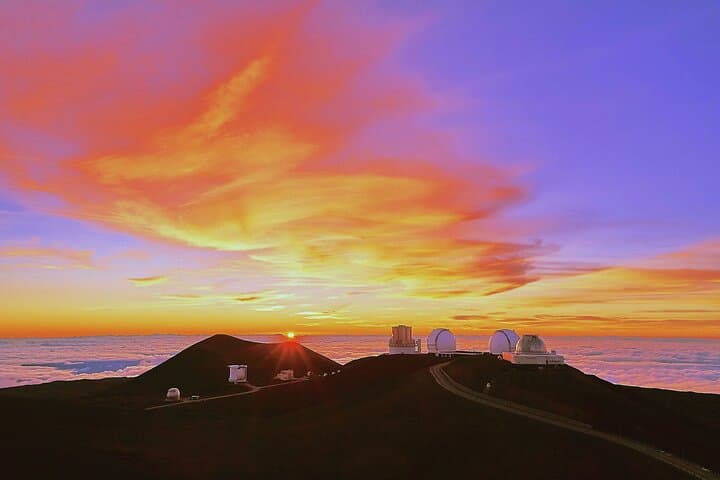
Sunset from the summit of Maunakea, 13,803 feet up and often above the clouds, is one of the great sights in Hawaiʻi. It also comes with more rules than any other outing on the island. There’s a vehicle requirement, set summit hours, and an age and health list that rules some travelers out entirely.
Here’s how to plan it, and how to do it with respect. If you already know you want a tour, jump to our Maunakea tour comparison.
A sacred mountain first
Before it’s an observatory site or a sunset spot, Maunakea is a wahi pana, a celebrated and storied place in Hawaiian tradition. The summit region is considered the realm of gods and spirits. The mountain holds burials, shrines, and Keanakākoʻi, an ancient adze quarry, and Lake Waiau is considered a very sacred site.
What that means for visitors:
- Stay on roads and marked paths.
- Don’t stack or move rocks, and take nothing home.
- Leave Lake Waiau undisturbed.
- Skip the sled. The Hawaiʻi Tourism Authority says snow sports aren’t allowed.
- Keep your voice down, and give space to anyone there for cultural practice.
Management is moving from the University of Hawaiʻi to the Mauna Kea Stewardship and Oversight Authority, which the state created in 2022, during a transition that runs to July 2028. Some tours include a stewardship fee in their price.
The Visitor Information Station today
Self-guided visits start at the Onizuka Center for International Astronomy Visitor Information Station (the VIS), at 9,200 feet. UH Hilo lists it as open 9 a.m.–9 p.m. daily but posts schedule changes, so check its notices before you drive up.
Two things many older guides get wrong:
- There’s no nightly public telescope program. It was halted in 2019 over safety and overcrowding concerns. After twilight, staff may give a laser-guided tour of the sky, depending on weather and staffing.
- Public telescope viewing is now monthly. A free telescope night runs once a month with limited space, and you have to reserve.
Our Maunakea summit and VIS listing has hours and fees at a glance.
Can you drive to the summit?
You can, in the right vehicle, but think hard about it. About 300 yards above the VIS, the pavement ends and roughly 4.5 miles of steep graded gravel begins. Only dependable, fully operable 4WD or AWD vehicles are allowed above the VIS. UH asks drivers to use 4WD-low and downshift on the way down. Muddy vehicles aren’t allowed either, and vehicles must be free of invasive species.
Then there’s the rental agreement. UH Hilo’s advice is to check with your rental company whether you may drive on Maunakea at all, so read the contract before you leave the lot, not at the VIS. The Hawaiʻi Tourism Authority goes further and advises visitors to go up only on a permitted, authorized guided tour.
We agree with HTA. A tour brings the 4x4, the parkas, the telescope, and a driver who handles that gravel for a living. For more on rentals, see do you need a car on the Big Island.
Who shouldn’t go above the VIS
UH Hilo advises against going above the Visitor Information Station if you:
- are under 13 (UH warns that prolonged high-altitude exposure may cause permanent bodily damage);
- are pregnant;
- are intoxicated;
- went scuba diving in the past 24 hours;
- have a heart or respiratory condition, or high blood pressure.
The scuba rule catches a lot of Kona visitors. Don’t book a summit day within 24 hours after a dive. If anyone in your group is on this list, skip the summit and book a mid-mountain stargazing session instead (more below).
Altitude and cold: what to expect
At the summit there’s about 40% less oxygen than at sea level. UH Hilo recommends acclimating at the VIS for at least 30 minutes on the way up, and summit tours build in that stop. Move slowly and bring water. If you feel unwell, tell your guide and head down.
It’s cold. Epic Tours warns that even its mid-mountain stargazing site can drop to 30°F, and the summit is higher and colder. Wear long pants and closed-toe shoes (Hawaii Forest & Trail requires both), plus a warm hat, gloves, and layers. Summit tours provide parkas or jackets. If you’re driving yourself, bring a real winter coat.
Summit sunset or mid-mountain stargazing?
The summit is open to the public from 30 minutes before sunrise to 30 minutes after sunset. After that, stargazers have to head down. So stargazing on the summit isn’t really an option for visitors. The classic tour does both halves: sunset from the top among the observatories, then telescope time at a lower site once it’s dark.
- Choose summit sunset plus stars if everyone is healthy, at least 13, and up for a long afternoon-into-night outing. Most summit tours set the minimum age at 13, and one sets it at 16.
- Choose mid-mountain stargazing if you have younger kids, someone is on the health list, or you mainly want the sky. It’s shorter and lower, and the telescopes are the point anyway.
Our three favorite summit tours all use small-group 4WD vans and end with telescope stargazing after sunset:
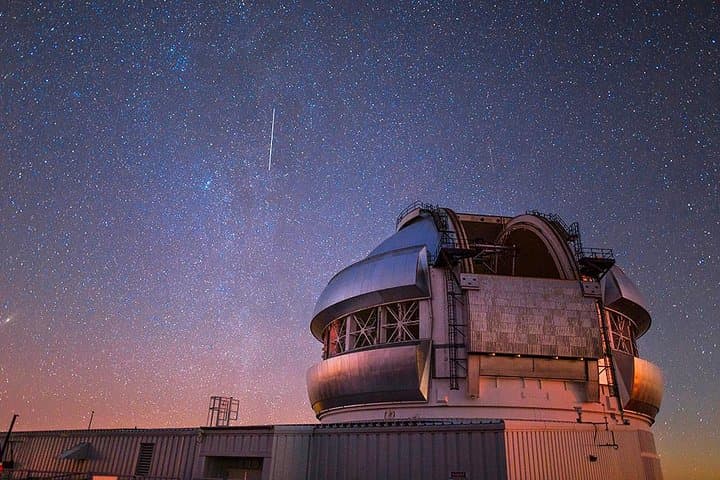
- Hawaii Forest & Trail is the long-running classic, with hooded parkas and a warm picnic dinner.
- Hawaii Island Holidays lets you meet at the VIS to shorten the day.
- Taikobo has operated since 1989 and offers a refund or credit if the summit can’t be reached.
 8 hours
Hawaii Forest & Trail
Maunakea Summit & Stars Small-Group Tour
Central meeting points: Kona (Courtyard King Kamehameha), Four Seasons Hualālai, Waikōloa (Queens' MarketPlace, Waikōloa Plaza) or Maunakea Visitor Station
Free cancellation
Booked securely on Viator
 5–8 hours
Hawaii Island Holidays
Maunakea Summit, Sunset & Stars
Meet at Kona Commons (Bank of Hawaii), Queens' MarketPlace Waikōloa, or Maunakea Visitor Information Station
Free cancellation
Booked securely on Viator
 7–9 hours
Taikobo Hawaii
Maunakea Summit Sunset & Stargazing
Kailua-Kona (Kauhola St office) or Queens' MarketPlace, Waikōloa
Free cancellation
Booked securely on Viator
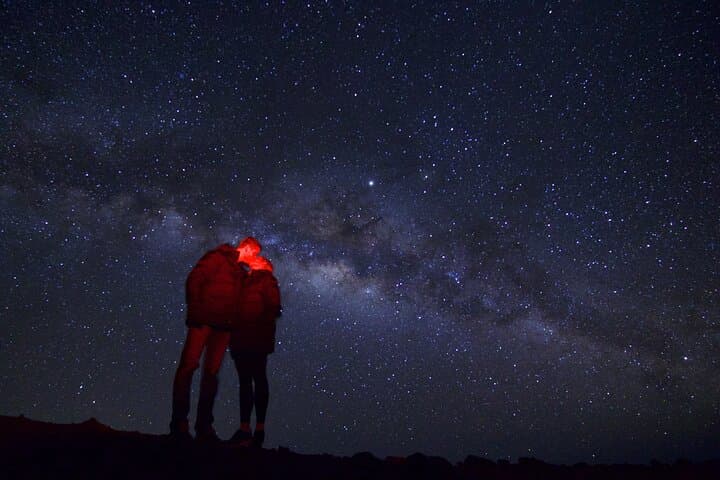
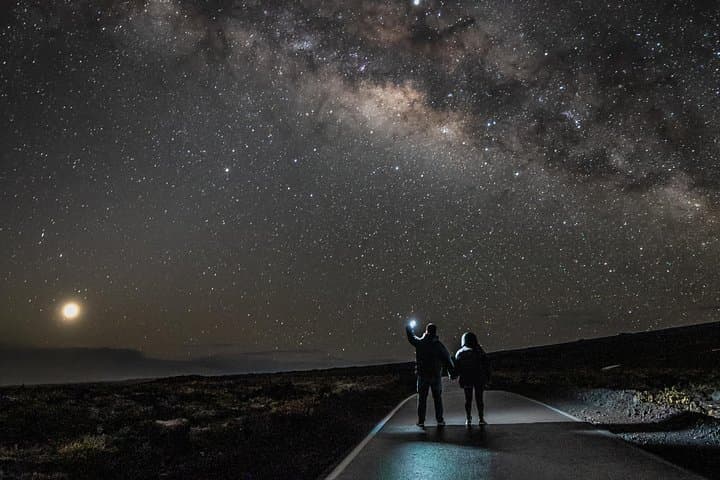
With kids under 13, this is the one we’d book: a two-hour, astronomer-led session at a mid-mountain dark-sky site, open to all ages with an adult. It runs only when the moon is under 20% or setting, and parkas are provided. There’s no hotel pickup. You drive yourself to the Puʻu Huluhulu cinder cone lot, where the Maunakea Access Road meets Saddle Road.
Ages, group sizes, meals, and live prices for every Maunakea tour are side by side in our comparison.
Where to stay for a Maunakea night
Most summit tours meet in Kona or at Queens’ MarketPlace in Waikōloa, which makes the Kohala Coast the easy resort base. It’s about 20 minutes north of Kona’s airport.
Prefer upcountry? Waimea sits at about 2,600 feet in ranch country. It’s the smart overnight if you’re driving yourself to a mid-mountain stargazing session.
Want some background before you go? The ʻImiloa Astronomy Center in Hilo pairs Maunakea astronomy with Polynesian wayfinding, which makes it a good primer, especially with kids. Then plan the rest of the week around the mountain with our Volcanoes National Park guide and 7-day itinerary.
Photo: Tell Death I'm Busy via Unsplash