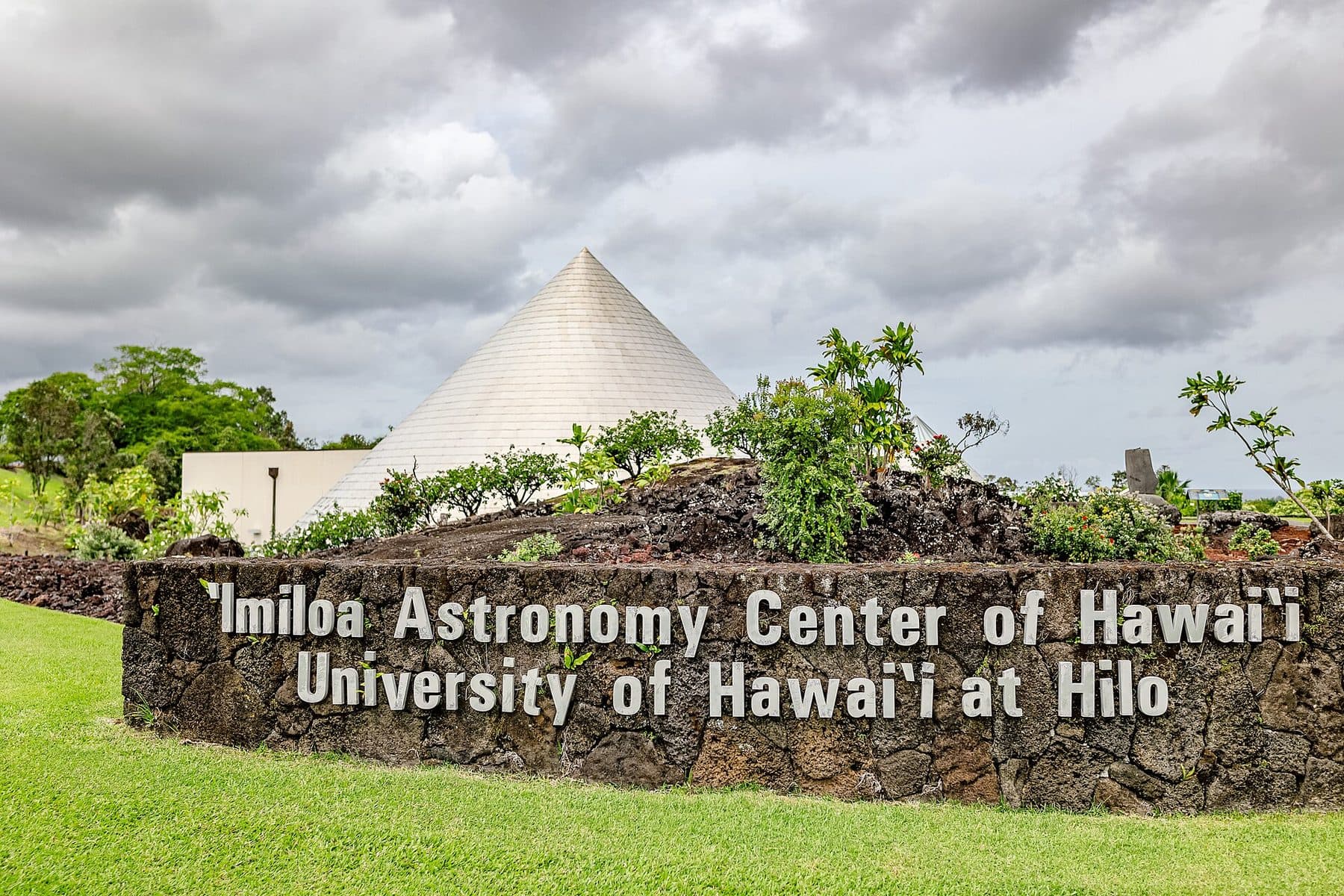
This center on the University of Hawaiʻi at Hilo campus pairs Maunakea astronomy with Polynesian wayfinding in a 12,000-square-foot exhibit hall, plus a full-dome planetarium and a native Hawaiian garden. Admission includes every planetarium show that day.
Why we love it
It's the best rainy-day stop in Hilo and the perfect primer before you drive up Maunakea.
What to expect
You enter through an atrium with the ʻImiloa Store, then move into an exhibit hall that sets Polynesian voyaging traditions beside the work of Maunakea’s astronomers. The real draw is the planetarium, the island’s only one, which the center bills as Hawaiʻi’s first 10k-resolution dome. A single ticket covers every show that day, so it’s easy to catch two screenings with exhibit time in between. Outside, a native landscape of endemic, indigenous, and Polynesian-introduced plants includes a Canoe Plants pathway. Lehua Restaurant on site serves lunch and dinner, which makes it easy to stay through midday.
Know before you go
- Time needed
- Plan on 3 to 4 hours for the exhibits plus a planetarium show or two.
- Planetarium shows
- The current lineup runs Tuesday to Sunday: One Sky Project at 11am, the live Pānānā Kilo Hōkū wayfinding show at noon, We Are Aliens at 1pm, and Habitat Earth at 3pm. A children’s show, 3-2-1 Liftoff!, plays at 10:15am on weekends. Times change, so check the schedule online first.
- Tickets
- Tickets are sold online through ʻImiloa’s sales site. Kamaʻāina rates are $14 for adults, $12 for seniors, and $9 for ages 5 to 12, and tickets are non-refundable.
- Holiday closures
- Besides closing every Monday, ʻImiloa closes on Thanksgiving, Christmas Day, New Year’s Eve, and New Year’s Day.
- Food
- Lehua Restaurant serves lunch Wednesday to Sunday from 11am to 3pm and dinner nightly from 5 to 9pm. Reserve through Resy.
- Parking
- Parking is free in the lot out front, on the University of Hawaiʻi at Hilo campus at 600 ʻImiloa Place.
Photo: NOIRLab/AURA/NSF/ T. Slovinský via Wikimedia Commons · CC BY 4.0