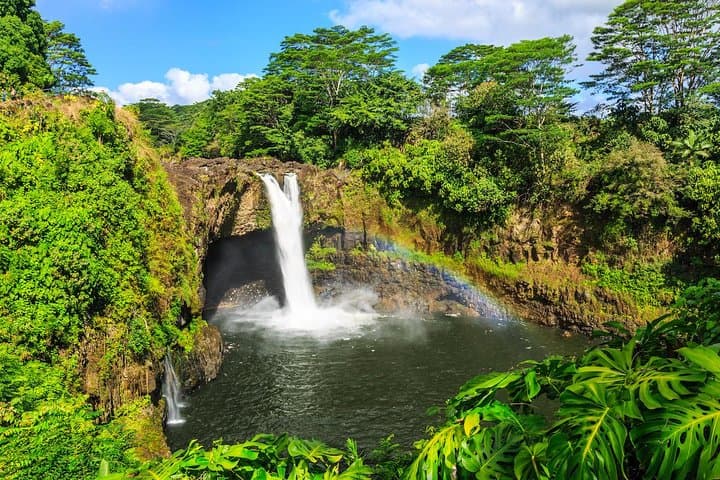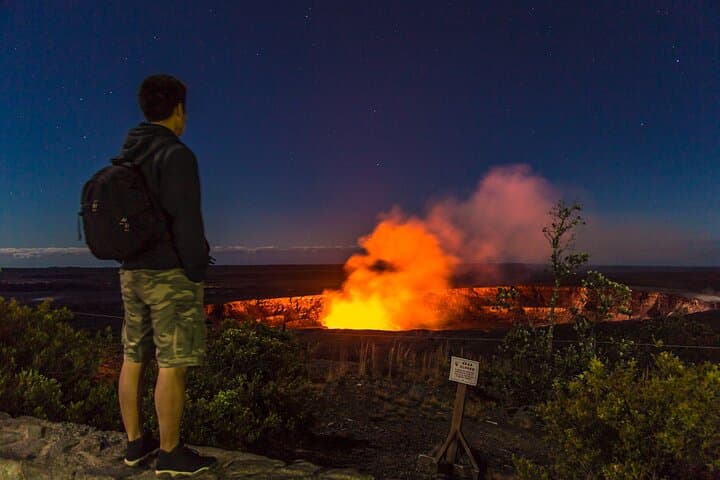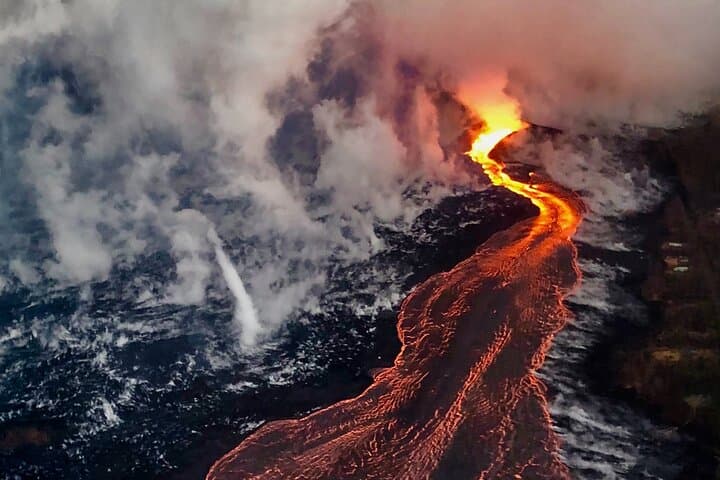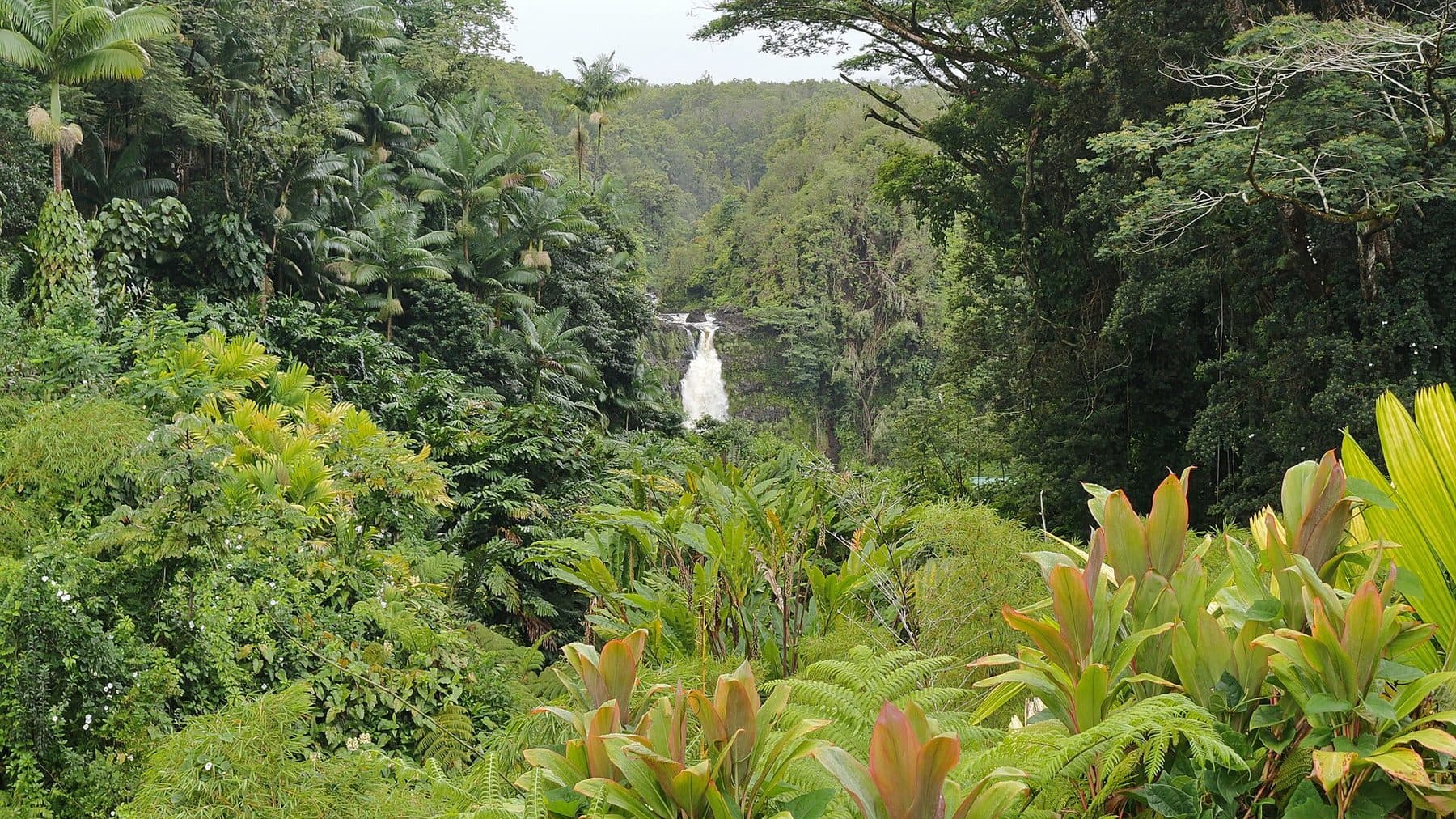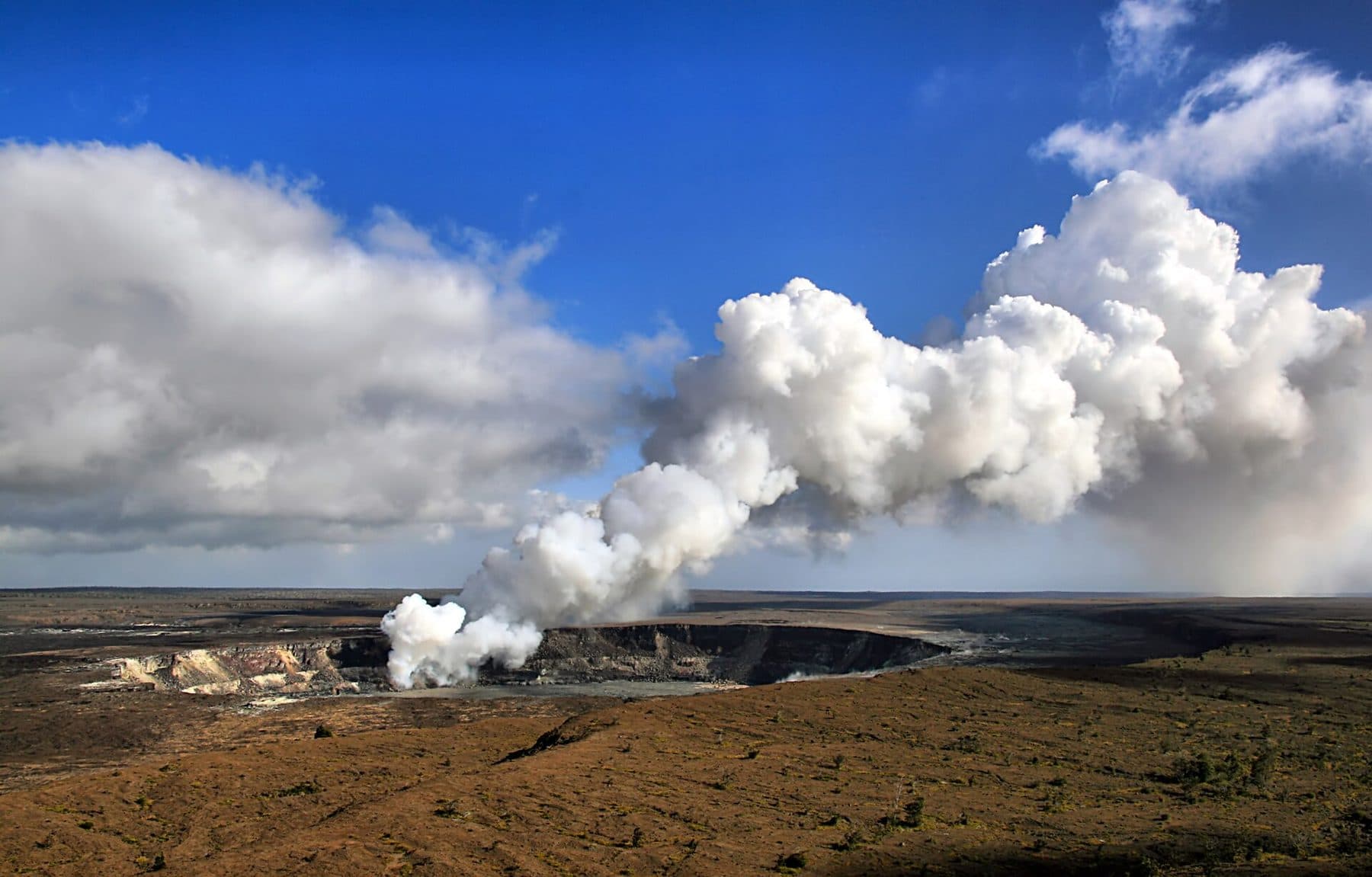
The park protects Kīlauea and Mauna Loa: craters, lava fields, steam vents, and rainforest. Since December 23, 2024, Kīlauea has been erupting in short bursts of lava fountaining inside Halemaʻumaʻu crater. By June 2026 it had set the record for the most fountaining episodes of any Kīlauea eruption.
Why we love it
This is the island's essential day trip, with craters, lava flows, and rainforest all along one drive. Give it a full day, and check the USGS updates before you go, because a fountaining episode can be spectacular.
Current conditions: As of October 2026, Kīlauea’s summit eruption is paused after episode 55 (Oct. 17), and the alert level remains ADVISORY/YELLOW, with no forecast for the next episode. The Kīlauea Visitor Center is still closed, the Hōlei Sea Arch collapsed in late September (stay out of the closed area), and Halemaʻumaʻu Trail, part of Byron Ledge Trail, Hilina Pali Road past Mauna Iki trailhead, and Mauna Loa Road past the second cattleguard are closed.
What to expect
Most visits start on Crater Rim Drive, the 10.6-mile loop around the summit caldera at about 4,000 feet. Overlooks such as Uēkahuna, Kīlauea Overlook, and Kūkamāhuākea (Steam Vents) look across the caldera toward Halemaʻumaʻu. From the summit, Chain of Craters Road runs 18.8 miles down to the coast past lava flows and pit craters, with no food, water, or fuel along the way. Short walks like Nāhuku (Thurston Lava Tube) and the Kīlauea Iki Trail fill out the day. The summit can be 12 to 15 degrees cooler than sea level, and rainy and chilly in any season.
Know before you go
- Welcome Center
- The Kīlauea Visitor Center is closed for renovation, with reopening expected in late 2026. A temporary Welcome Center and the park store operate at Kīlauea Military Camp, daily 9 a.m.–4:45 p.m., with parking at the ball field.
- Fees and hours
- Entry costs $30 per private vehicle, $25 per motorcycle, or $15 per person on foot or bike, and ages 15 and under are free. The park is open 24 hours. On the remaining 2026 fee-free days, Oct. 27 and Nov. 11, only U.S. residents get in free.
- Parking
- Lots can be full by 10 a.m. Nāhuku parking is extremely limited, so NPS suggests arriving before 9 a.m. or after 5 p.m. The tube is lit 8 a.m.–8 p.m., and the walk is 1.5 miles round trip from Kīlauea Iki Overlook.
- Trails
- Kīlauea Iki Trail is a 3.3-mile loop with a 400-foot descent and climb, so allow 2–3 hours. Halemaʻumaʻu Trail and part of Byron Ledge Trail were closed on Oct. 7, 2026, because of summit inflation and increased earthquakes.
- Air quality and night viewing
- Volcanic gas can endanger sensitive groups, so check air quality often. For night eruption viewing, NPS suggests a headlamp, warm rain gear, a dust mask, and eye protection against tephra.
- Rules and access
- Flying drones is prohibited without the superintendent’s written approval. There’s no shuttle or public transit inside the park, and rideshare is extremely limited. Vehicles over 25 feet long or 8 feet wide can’t drive to Uēkahuna.
Photo: Brocken Inaglory via Wikimedia Commons · CC BY-SA 3.0