
Big Island · Eat & Drink
Coffee Farms on the Big Island
Coffee farms that welcome visitors for tours and tastings.
Coffee FarmsSouth Kona
Greenwell Farms
It's the best free introduction to Kona coffee. Take the tour, taste several coffees side by side, and you'll finally get what the fuss is about.
Read moreCoffee FarmsKona
Mountain Thunder Coffee Plantation
Up here in the green hills above Kona, the organic, farm-to-cup setup sets it apart from the roadside tasting rooms.
Read moreCoffee FarmsKona
Hula Daddy Kona Coffee
A smaller, more personal take on the Kona coffee tour, where you can actually talk with the roaster and the owners.
Read moreVisiting Kona coffee farms
“Kona coffee” is a legal place name, not a style. Under state rules, Kona means the North Kona and South Kona districts on the island’s west side, where the slopes of Hualālai and Mauna Loa catch a belt of persistent cloud. The University of Hawaiʻi’s Rainfall Atlas describes that cloud-and-rain zone as home to the farms that produce Kona coffee. The farms spread across the upcountry slopes above Kailua-Kona, from Holualoa south to Hōnaunau, so two or three fit easily into one morning.
Free tours versus booked tours
- Drop-in and free: Greenwell Farms in Kealakekua, a family farm dating to 1850, runs free tours daily with tastings of its 100% Kona coffees. Mountain Thunder on Hualālai offers free guided tours of about 20 minutes, with samples of several roasts.
- By reservation: Hula Daddy in Holualoa runs hour-long tours of the orchard and roasting room on weekday mornings, finishing with a guided tasting.
- Booked ahead: two farms sell their tours on Viator, which locks in a time slot.
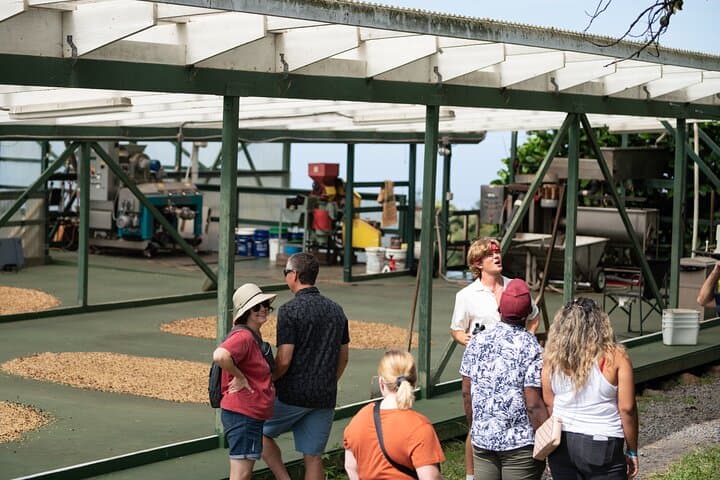 1 hour
Heavenly Hawaiian Kona Coffee Farm & Konalani Coffee Bar
Kona Coffee Farm Tour
Heavenly Hawaiian farm, 78-1136 Bishop Rd, Hōlualoa
Free cancellation
Booked securely on Viator
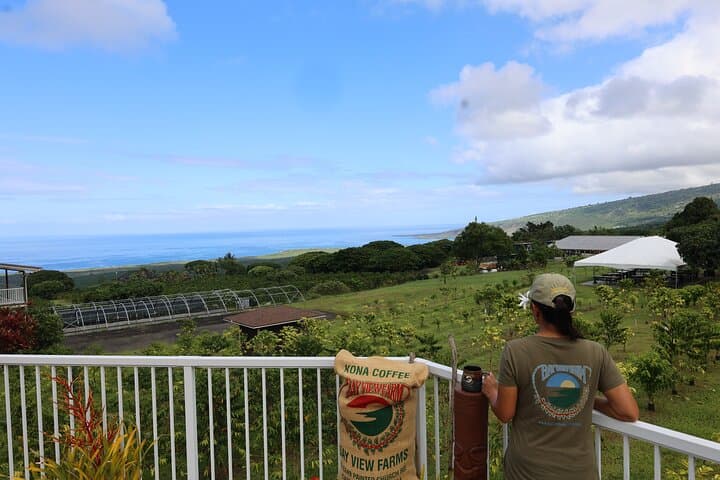 1–2 hours
Bay View Farm
Coffee Farm Tour: Tree to Tasting Room
Bay View Farm, 83-5249 Painted Church Rd, Hōnaunau (South Kona)
Free cancellation
Booked securely on Viator
Reading a coffee label
A bag that says “Kona blend” can contain mostly foreign coffee. Under current Hawaiʻi labeling rules, blends must state the percentage from each origin, and a 10% Kona blend is still legal. That changes: from July 1, 2027, a blend using a Hawaiʻi region name must contain at least 51% Hawaiian coffee. If you want the real thing, look for “100% Kona coffee.” Buying at the farm is the surest way to get it.
Time your visit
The Kona Coffee Cultural Festival, now in its 55th year, runs November 6–15, 2026, with farm events across the coffee belt. Any time of year, pair the drive with Puʻuhonua o Hōnaunau at the bottom of the hill.
Sources: dab.hawaii.gov · rainfall.geography.hawaii.edu · dab.hawaii.gov · konacoffeefest.com