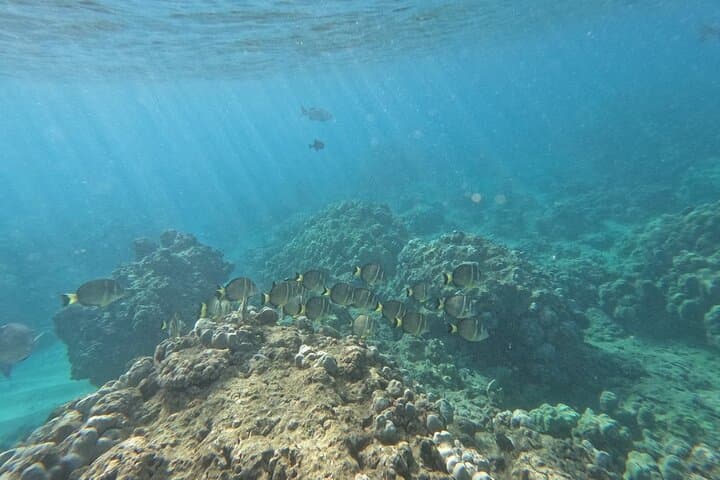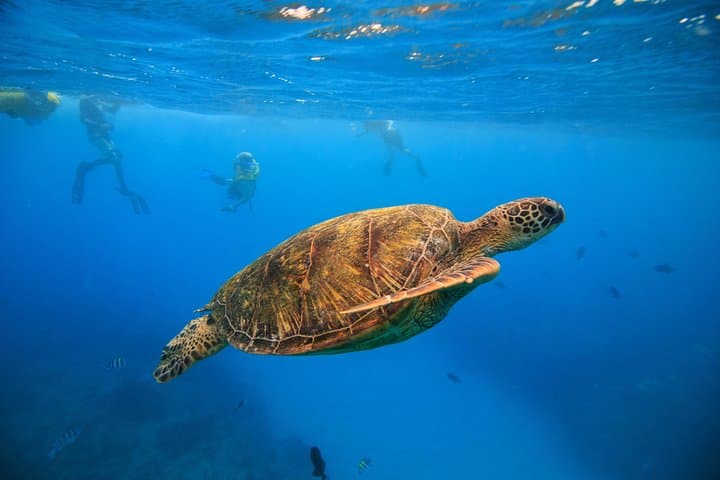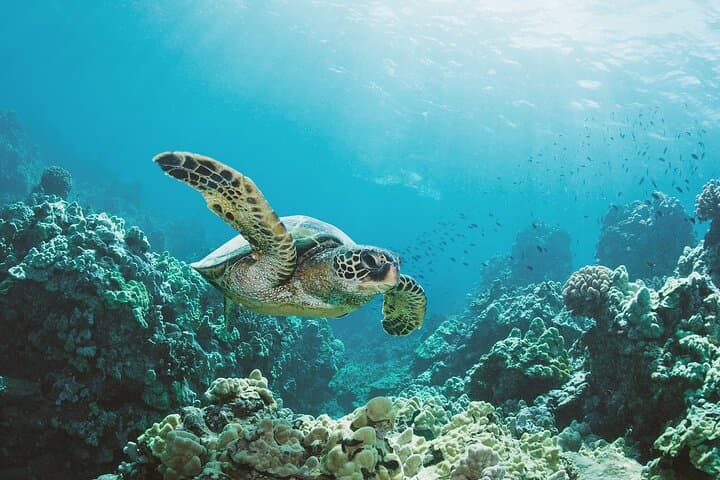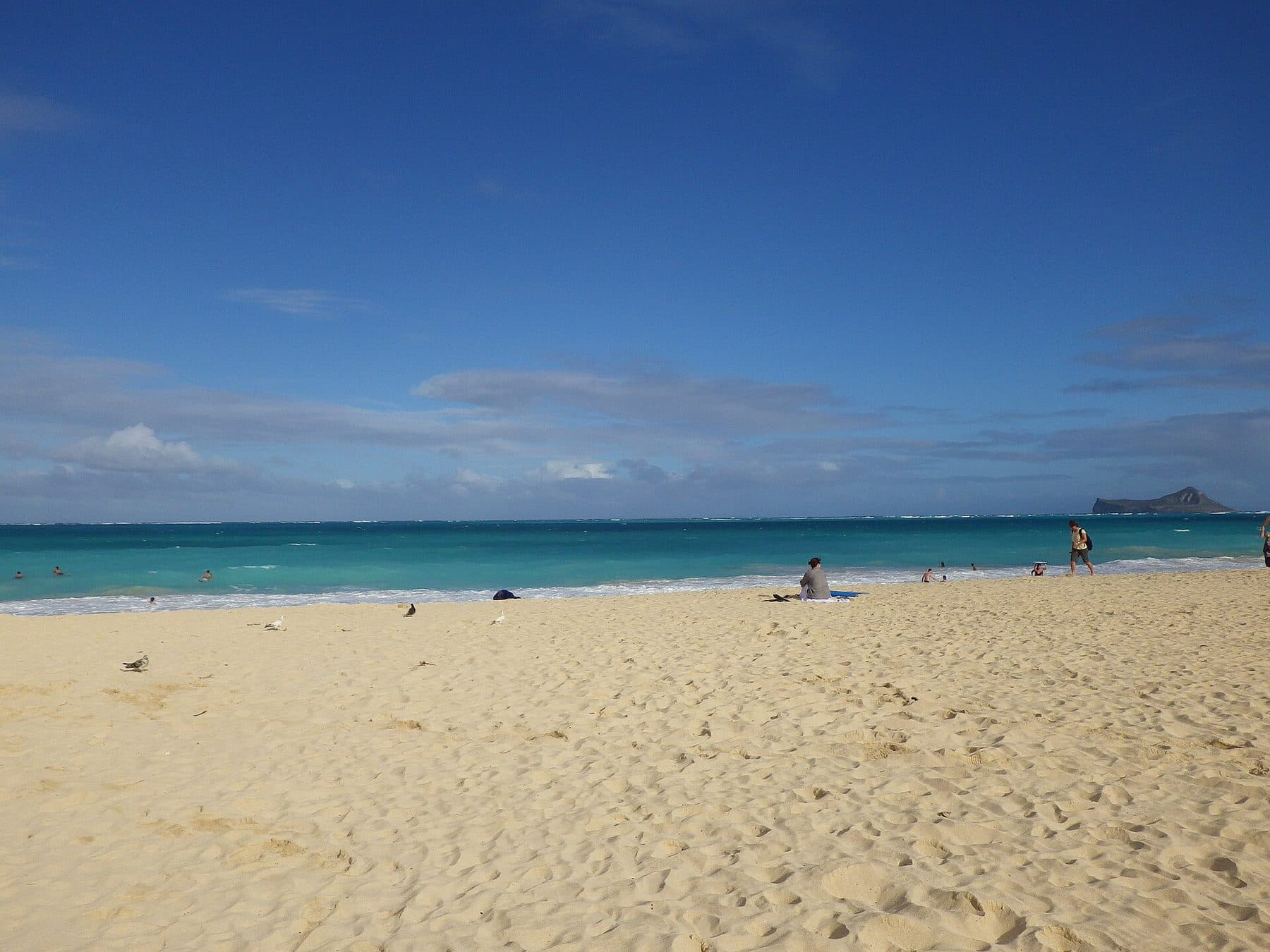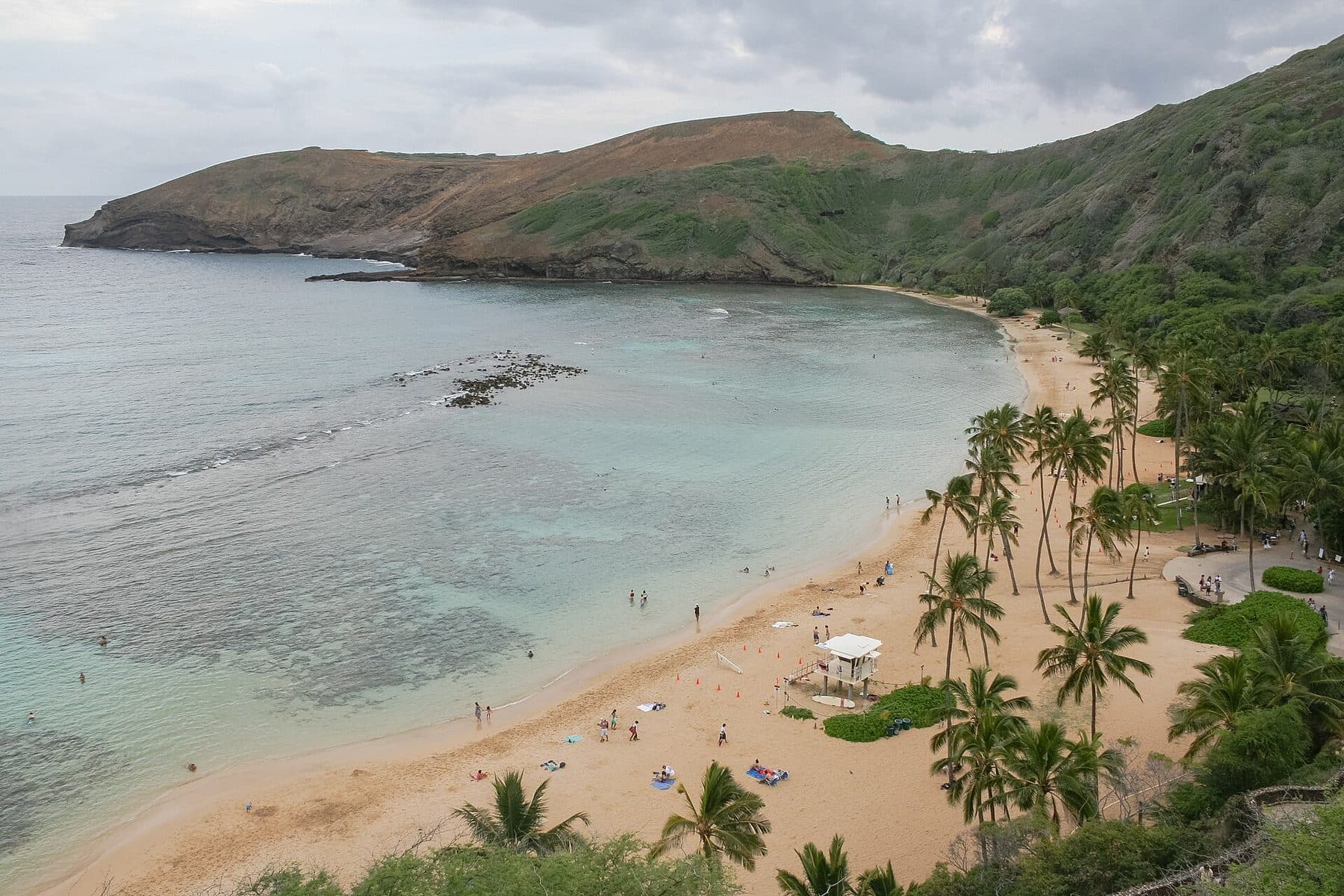
A sheltered volcanic crater bay that became Hawaiʻi’s first Marine Life Conservation District in 1967. The City runs the land side with a reservation system, a mandatory education video and a tram down to the beach; the State manages the water.
Why we love it
It’s the easiest place on Oʻahu to float over a healthy reef with schools of fish, and the strict rules are the reason it looks this good.
Current conditions: Reopened Aug. 19, 2026 after a sewer-work closure. The City expects another temporary closure in early 2027 (dates not yet announced).
What to expect
Your visit starts at the hilltop Marine Education Center, where everyone watches the required video, then you walk or ride the tram down to a curved beach facing the inner reef. The best snorkeling is in the shallow sandy pockets inside the reef; stay inside and don’t stand on coral. Go early: the bay is calmest in the morning, and entry ends at 1:30 p.m. Snorkel gear rents on site 7 a.m.–3 p.m., and the food concession and gift shop take cards only. Plan on three to four hours.
Know before you go
- Reservations
- Admission-only slots open 2 days ahead at 7 a.m. HST on pros.hnl.info, up to 5 adults and 5 kids per booking. Roberts Hawaiʻi packages with transport from Waikīkī book up to a month ahead.
- Walk-ins
- About a quarter of entry goes to walk-ins, first come, first served, from 6:45 a.m. The whole party must be present.
- Fees
- Non-residents 13+ pay $25 plus a 2.35% online fee; kids 12 and under free. Parking is $3 per non-resident car, cash only.
- Closed days
- Closed every Monday and Tuesday, Dec. 25 and Jan. 1. Beach cleared 3:30 p.m., preserve empty by 4 p.m.
- Lifeguards
- Ocean Safety lifeguards are on duty; there are restrooms and freshwater showers.
- 2027 closure
- Sewer replacement runs through summer 2027, and another temporary closure is expected in early 2027.
Photo: Diego Delso via Wikimedia Commons · CC BY-SA 3.0